


Cat Mail Co.
See the game in motion.
Revlize indexed this signal before it reached scale.
7/9/2026 · 76 reviews
75 reviews
-1% · -1
Why it entered the radar: hidden gem.
This timeline records correlation only. Revlize does not claim to have caused later growth.
A cozy game that stops being cozy when the boxes won't fit.
The first few hours are meditative. By hour five, you're managing inventory chaos that the game never equipped you to handle.
Cat Mail Co. sells what the official description promises—a meditative sorting loop—but players are discovering it's less therapeutic than its marketing suggests when the backlog builds, turning zen into mild dread.
The opening 2–3 hours deliver exactly what the marketing promises: a meditative, pressure-free arrangement experience. Players describe this phase as genuinely calming and sleep-adjacent. This signal is consistent across all three language samples.
A second pattern emerges around hours 4–6: inventory scaling and multiple constraint types (fragile, heavy, cold storage) begin to create bottlenecks. English and Chinese reviews both report this moment explicitly. The response splits—some players see it as intended complexity, others as a tonal break.
Multiplayer co-op works smoothly for object placement and task division in single-session play, but Chinese reviews specifically document synchronization failures where parcels display differently across players' screens, making coordinated organization impossible. This bug is scoped to multiplayer and does not appear in the English solo-play sample.
Synthesized from 44 public Steam reviews · 3 languages
- —Players seeking a cooperative activity with a partner or small group where both people feel productive without competing.
- —People who find organization and arrangement inherently calming and won't experience late-game backlog scaling as a problem—specifically, those who enjoy Tetris-like spatial optimization.
- —Solo players with patience for incremental unlocks and the ability to treat storage overflow as a puzzle to solve rather than a failure state.
- —Players who experience inventory management as stressful rather than meditative—the back half of the game is essentially resource constraint solving.
- —Anyone hoping for a full narrative or character-driven experience wrapped in cozy packaging; the story is minimal and revealed only through incidental parcel details.
- —Multiplayer groups on early access—Chinese reviews flag sync bugs between players where parcels appear in one view but not another, making coordination impossible.
Cat Mail Co. is a cooperative postal management game where you sort, weigh, stamp, and load packages for a cat-run post office. There are no timers or fail states. Players work at their own pace to restore an abandoned mail operation and unlock new features.
A quiet postal service restoration sim. No timers, no penalties. Sort mail, weigh parcels, apply stamps, and manage inventory at your own pace. Day/night cycle unlocks new mechanics. Up to 4-player co-op. Discover the story buried in the backlog.
A relaxing game where you sort and organize packages with no pressure. Good for unwinding, especially with a partner. One of the few relaxing games that actually scratches an organizational itch. Early hours are genuinely meditative. Some players explicitly note the game becomes more complex and inventory-heavy later, but the low price and pleasant art style make it worth the time.
Cat Mail Co. delivers on its opening promise: a meditative sorting experience where parcels move at your pace, packages get weighed and stamped, and the boat loads with no timers or penalties. The first few hours across all language samples show players genuinely engaged in the tactile, low-pressure rhythm of the work.
But the game's constraint structure reveals itself around hour four. Packages spawn faster, storage fills quicker, and the optimization layer—fragile goods, heavy items, cold storage zones—transforms the experience from meditative into managerial. English and Chinese reviews both document this moment: players who started calm describe hitting inventory chaos that feels at odds with the marketed stress-free tone. Some embrace the escalating puzzle; others experience it as tonal whiplash. The sampled reviews show multiplayer co-op functions smoothly for task division in single-session play, though Chinese players report synchronization bugs where parcels display differently across screens, blocking coordinated organization. What emerges is a game caught between two designs—zen arrangement and logistics simulation—without explicitly choosing which it wants to be. Players are generous (the core loop is likeable, the price fair), but the back-half experience consistently diverges from the opening promise in ways the marketing didn't signal.
- 01The tactile satisfaction of sorting, weighing, and stamping individual packages—players report this specific activity as hypnotic and stress-relieving.
- 02Co-op is frictionless in single-session play; the game lets two players work toward the same goal without competitive or turn-based tension.
- 03The game delivers what most relaxation games don't: actual gameplay with decisions (where to place items, what to prioritize) rather than passive observation.
- 04Art direction and sound design are consistently cited as soothing; the ambient design supports the core loop even when the logistics start to pile up.
“I love this game so much, and it is so cute.”
“Walkthrough: https://youtu.be/0l7rUR6p3Rg”
“Bug: Soft Lock When Second Player Leaves After Sending Boat Away”
“I first saw the game during June's 2026 Nextfest and played a lot of the demo.”
Sentences extracted from highest-voted public Steam reviews. Unedited.
The game's promise of stress-free gameplay collides with its escalating inventory pressure. As players progress, the junk pile spawns packages faster, the boat stays small, and storage areas fill quicker than they can be emptied. The sampled reviews show this transition clearly: early enthusiasm gives way to descriptions of the experience as "exhausting" and "anxiety-inducing" rather than relaxing. This isn't a rare complaint—it appears across English and Chinese reviews from players who engaged sincerely with the opening hours. The official framing downplays this constraint, leading players to experience the late game as a departure from the promised tone rather than an intentional escalation.
English reviews consistently parse the game as two experiences: the opening is described in explicitly therapeutic terms (low cortisol, meditative, zen). Later players note complexity scaling but frame it as added depth rather than tonal whiplash. English reviewers also emphasize social friction—one player mentions a bug where co-op breaks when a second player leaves, and another jokes about partner resentment when suggesting breaks. These observations suggest English players view the game as a cooperative bonding activity even when complexity rises.
Chinese reviews identify the same backlog-scaling pattern as English reviews but interpret it more negatively, using words like exhausting and anxiety-inducing rather than complexity. Several Chinese reviewers explicitly recommend playing the demo extensively before buying, warning that the full game 'feels more tedious than demo expectations.' Chinese reviewers also flag a distinct technical problem: multiplayer sync bugs where parcels appear in one player's view but not another's, making coordinated play impossible. This issue does not appear in the English sample, suggesting platform variance or build-specific regression. Chinese reviews also show sensitivity to translation quality—one reviewer explicitly rejected the game over cultural discomfort with NPC naming choices.
French sample is small (6 reviews, all positive), but the framing is notably different from English and Chinese: French reviewers emphasize the absence of timers and the allowance for personal pacing as the game's central virtue. One reviewer explicitly highlights that time advances only after serving customers, not in real-time. French reviews do not mention backlog anxiety or late-game friction at all. This may reflect lighter engagement depth (sample size caveat) or a different playstyle orientation. The signal is too limited to establish a distinct French interpretation, but the omission of backlog complaints is notable.
Community lenses — what each language group noticed distinctly.
Cat Mail Co. delivers precisely on its opening promise: a meditative sorting experience where parcels move at your pace, packages get weighed and stamped, and the boat loads with no timers or penalties. The first few hours across all language samples show players genuinely engaged in the tactile, low-pressure rhythm of the work. Around hour four, the game's constraint structure reveals itself. Packages spawn faster, storage fills quicker, and the optimization layer—fragile goods, heavy items, cold storage zones—transforms the experience from meditative into managerial. English and Chinese reviews both document this transition: players who started calm describe hitting inventory chaos that feels at odds with the marketed stress-free tone. Some embrace the escalating puzzle; others experience it as tonal whiplash. Multiplayer co-op functions smoothly for task division in single-session play, though Chinese players report synchronization bugs where parcels display differently across screens, blocking coordinated organization. What emerges is a game caught between two designs—zen arrangement and logistics simulation—without explicitly choosing which it wants to be. The sampled reviews show players are generous with their reception (the core loop is likeable, the price fair), yet the back-half experience consistently diverges from the opening promise in ways the marketing didn't signal, creating a disconnect between expectation and escalation that diminishes the intended therapeutic appeal.
% positive reviews
Under-the-radar potential
Store framing vs player language
Voice and personality in reviews
Would a stranger click buy?
75 reviews currently indexed
44 analyzed · english, schinese, french
Last synthesized: Jul 9, 2026 · 44 reviews in that synthesis
Yes—for the first 2–3 hours. The core sorting and arrangement loop is genuinely meditative. But as you progress, inventory scaling and constraint complexity (fragile goods, cold storage, small ship capacity) introduce optimization pressure that players experience as less relaxing. Reviews split on whether this escalation is an intentional feature or a tonal mismatch.
Yes, up to 4-player co-op. Solo co-op (two players, one session) works smoothly. However, sampled reviews from Chinese players report synchronization bugs where parcels appear in one player's view but not another's, breaking coordinated organization. The English sample does not report this issue, suggesting possible platform or build variance.
Players describe it as a 'relaxing cozy' game. It's not directly compared to specific titles, but the genre is postal-management-meets-Tetris: organizational problem-solving without competitive pressure or timers.
If you enjoy arrangement and organizational gameplay and don't mind incremental complexity, yes. The price is low, and the core loop is satisfying. If you expect pure, uninterrupted relaxation, manage expectations: the later game becomes more demanding. Solo play is consistently positive; multiplayer has technical issues worth waiting to be patched.
Players report 3–5+ hours depending on engagement. The game doesn't have a traditional ending—it's structured around unlocking new features and destinations as you improve the post office. Some players continue past the 'completion' point because the loop itself is engaging.
English reviews report one multiplayer bug (soft lock when a second player leaves after sending the boat). Chinese reviews flag multiplayer synchronization issues where parcels appear differently in each player's view. Translation quality is also mentioned as a concern by some players. Solo play appears stable.
Synthesized from public Steam reviews. Not affiliated with Valve Corporation.
Does this analysis represent what players are saying?
More games with overlapping community patterns.

Painting PC
The game isn't the commissions. The game is the permission to paint without judgment.

Cat Squeeze
The game that made squeezing a cat through a pipe the basis for an entire puzzle language.
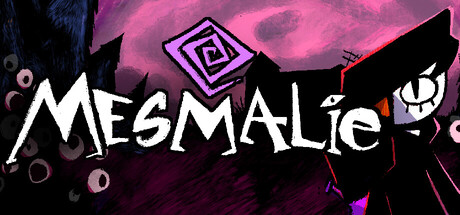
Mesmalie
You're not learning witchcraft. You're watching three artists show you how good they are at their craft.