Built the End
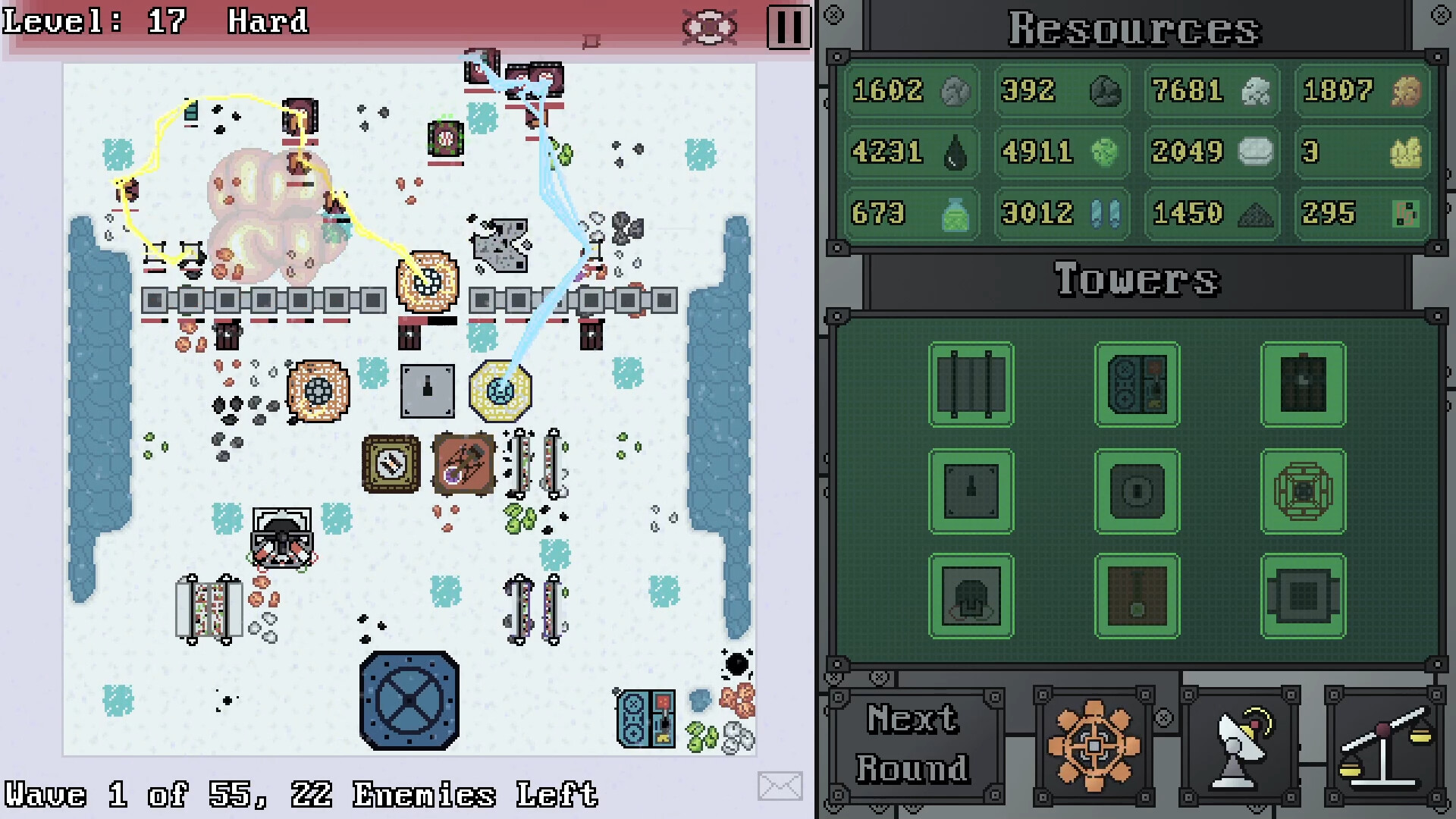
Revlize indexed this signal before it reached scale.
6/22/2026 · 11 reviews
12 reviews
+9% · +1
Why it entered the radar: hidden gem.
This timeline records correlation only. Revlize does not claim to have caused later growth.
This tower defense game doesn't punish you for losing—it teaches you.
The music and pixel art matter less than the moment you realize the game's difficulty curve is honest, and failure is just the next lesson.
Built the End doesn't hide what it is—tower defense with resource management and escalating difficulty—but players keep praising something the official description downplays: the game's deliberate pacing and quality-of-life design that makes failure forgiving rather than punishing.
Players consistently frame the difficulty not as a wall but as a teaching tool. The language is specific: 'challenging without feeling unfair,' 'makes you think,' 'requires some thinking and strategy.' This distinction matters because it separates fair difficulty from punitive difficulty.
The auto resource system is praised for preserving momentum. Multiple reviews highlight this: the game keeps you in the action loop without forcing you out for menu management. This is a concrete design choice, not just polish.
Across reviews, players use the word 'addictive' and describe multi-hour sessions. The consistency of this language suggests the feedback loop (fail, retry, learn, progress) is the actual hook, not the art or music.
Synthesized from 11 public Steam reviews · 1 language
- —Strategy players who want tower defense that respects their time and doesn't gatekeep difficulty behind artificial friction.
- —Players who enjoy games where losing is information, not punishment—who are willing to iterate and adapt rather than brute-force a single solution.
- —Anyone who values cohesive presentation: the pixel art, music, and UI design all serve the core loop rather than distracting from it.
- —Players looking for a casual tower defense game who want to set it and forget it. This requires active positioning and strategy even on easier modes.
- —Those who expect the difficulty to scale slowly or hand-hold the early game. The game makes you think from level one.
- —Anyone sensitive to retrying. The loop is built around it, and if failure feels punishing rather than instructive, the game won't click.
Built the End is a tower defense game where you build and position towers to survive waves of machines. Resources fluctuate with each level, forcing you to adapt your spending strategy. The game offers multiple difficulty modes and includes design choices that make retries feel rewarding rather than tedious.
An endless wave of machines advances against your base. You build and position towers with specific roles, manage fluctuating resources, and adapt as enemy waves grow more complex. Success depends on combining defenses and making strategic decisions about when to upgrade or prepare for the next assault.
A tower defense game that rewards strategy and thinking, with intelligent difficulty that challenges without frustrating. The art, music, and sound design are polished. Most importantly: the quality-of-life features—especially the auto resource system—keep you playing for hours without tedium. You fail, retry, and learn. That loop is addictive.
Built the End occupies an unusual space in tower defense: it's genuinely challenging on higher difficulties, but it never feels like the game is cheating you. Across the reviews, this distinction appears repeatedly and in specific language. Players describe the difficulty as "challenging without feeling unfair" and mention that "quality of life features make retrying and learning easy." These aren't throwaway compliments—they're describing a design philosophy.
The auto resource exchange system is the mechanical spine of this. Rather than forcing players into menu math during tense moments, the game handles conversion automatically. One reviewer notes this explicitly: "you can just hit a button" instead of "stopping to do tedious math." This is not a small thing. It means the difficulty is about positioning and strategy, not about whether you can do arithmetic quickly enough to survive the next wave.
The pixel art and music are genuinely excellent—multiple reviews bring these up unprompted, and one player jokes "missile launchers might be missing but the soundtrack is HITTING." But the art doesn't explain why players say they're "hooked" after a few days or why they describe the game as "addictive." The hook is deeper: it's the feedback loop. You lose a wave. The game doesn't punish you with a long reload or a scolding screen. You try again, and because the difficulty scales intelligently and the level layout varies (prices shift, enemy compositions change), you learn something concrete. The next attempt feels different. That's what drives the "play for hours in one sitting without getting bored" language.
The resource management layer deserves specific attention. Players mention it repeatedly, not as a burden but as a strategic axis. The fact that resource prices vary per level means you can't brute-force a single strategy; you have to read each wave's composition and adjust. One reviewer frames this directly: "The prices of resources vary at each level, combined with level layout and enemy wave composition combine to give you some idea" of what you need to do. This is intentional design—not randomness disguised as replayability, but meaningful constraints that force adaptation.
What's absent from these reviews is as telling as what appears. No one complains about bugs, unfair spikes, or broken towers. No one feels cheated by the difficulty. The one quasi-complaint—"missile launchers might be missing"—is immediately overridden by praise for what actually exists. That's not because the game is perfect. It's because the game respects player time and agency enough that rough edges don't register as betrayals.
Reception here is 100% positive, but the signal isn't just "good game." It's "well-paced learning loop that doesn't waste your time."
- 01The auto resource exchange system eliminates menu friction during tense moments, letting strategy and positioning drive the difficulty instead of arithmetic speed.
- 02Difficulty scales fairly across modes; higher difficulties demand real adaptation, not punishment. Players specifically note that challenging doesn't mean unfair.
- 03The feedback loop is tight: lose a wave, retry immediately, encounter slightly different enemy composition or resource prices, learn something new. No long downtime between attempts.
“Really enjoyable experience so far.”
“Just got the game a few days ago and I’m already hooked.”
“The game is pretty fun to play I enjoy managing the resources and coming up with defensive positions of the towers.”
“For every person who dreams up the electric lightbulb, there is one that dreams up the atom bomb.”
Sentences extracted from highest-voted public Steam reviews. Unedited.
No recurring technical or design complaints appear in the sampled reviews. The closest thing to a barrier is that the game demands active thinking—it won't let you autopilot—but reviewers who mention difficulty frame it as a feature, not a flaw.
Current review sample is English-only. The player language is unusually specific and consistent: reviewers are not just recommending the game—they are describing the same underlying mechanism repeatedly. The vocabulary diverges from official description in concrete ways (reviewers emphasize 'addictive,' 'learning,' 'feedback loop,' 'quality of life,' 'resource management' as lived experience rather than feature list). This consistency suggests the signal is strong despite single-language scope. Players are articulating why the game works, not just that it works.
Methodological note — single-language sample, not cross-cultural contrast.
The reviews show a game that has earned genuine affection, not just positive ratings. Players return because they feel smarter after each failure—the game's design ensures that. The difficulty isn't a barrier; it's the main point of engagement. No friction appears in the analyzed reviews around crashes, unfairness, or tedium. The consistency of player language about the feedback loop (fail, learn, retry, progress) suggests that Built the End has solved a specific design problem that most tower defense games don't even attempt: making each run a genuine lesson rather than a punishment. Whether that appeals to a player depends entirely on whether they want tower defense to demand constant thinking or reward passive income management. For the former, this game delivers.
% positive reviews
Under-the-radar potential
Store framing vs player language
Voice and personality in reviews
Would a stranger click buy?
12 reviews currently indexed
11 analyzed · english
Last synthesized: Jun 25, 2026 · 11 reviews in that synthesis
The auto resource exchange system keeps you in the action loop without menu friction, and the difficulty is tuned to feel challenging but fair. Quality-of-life features make retrying fast and rewarding, so failure becomes learning rather than punishment.
On higher difficulties, yes—it demands active strategy and positioning. But players consistently note it's hard without feeling unfair. The game scales difficulty across modes, and even early levels make you think.
Reviewers report playing for hours without getting bored. The tight feedback loop and varying enemy compositions per wave keep each retry feeling different and purposeful.
The analyzed reviews show no recurring technical complaints. The game runs smoothly and respects your time between attempts.
Synthesized from public Steam reviews. Current review sample is english-only, so this analysis focuses on shared player language rather than cross-cultural contrast. Not affiliated with Valve Corporation.